


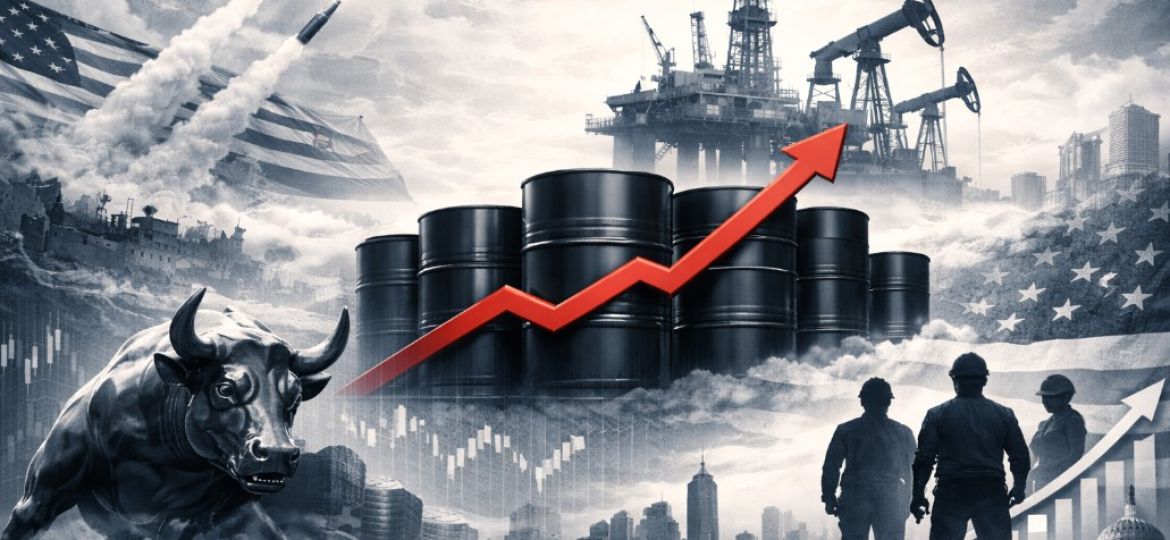
US Markets Steady as Iran War Keeps Oil and Nerves Elevated
For the holiday‑shortened week ending Thursday, 2 April 2026, U.S. equities finished modestly higher overall, but the mood into the close was clearly more cautious than the index levels suggest. The S&P 500, Nasdaq and Dow all posted weekly gains, helped by resilient U.S. data and ongoing strength in large‑cap growth and quality tech.
Trading ended on Thursday ahead of the Good Friday market holiday, so investors were effectively positioned into the March jobs report and a live geopolitical shock without the ability to react until the following week. That kept position sizes tighter and intraday swings sharper, especially after fresh comments from President Trump on Iran late in the week.
Iran War and Oil: From Panic to a Persistent Risk Premium
The Iran war remained the dominant macro story. Earlier spikes in crude tied to fears over the Strait of Hormuz had already pushed a big risk premium into oil; this week, markets shifted from pure panic to treating it as a persistent, structural shock.
Trump’s latest vow to “hit Iran hard” and extend the campaign reignited concerns about supply disruption. WTI pushed back above the low‑$110s, Brent stayed elevated, and U.S. gasoline moved north of $4 a gallon, reinforcing the idea that energy costs will be a meaningful drag on consumers and a potential upside risk to inflation.
That backdrop drove relative outperformance in energy and defense, while more cyclical, consumer‑sensitive areas lagged. Volatility stayed elevated, but there was no broad capitulation: markets are pricing a prolonged conflict and higher energy, not a full‑blown global recession.
Macro Backdrop: Strong Labor, Complicated Fed Path
On the data side, jobless claims remained low, underscoring a still‑resilient labor market even as geopolitical risk rises. With the full March payrolls report landing while markets were closed, traders spent Thursday effectively pre‑positioning around a still‑solid growth story but with a new inflation twist from oil.
For the Fed, the message is mixed: a tight labor market plus an oil‑driven energy shock makes aggressive rate‑cutting harder to justify, even if growth eventually slows. Market expectations have shifted toward fewer cuts, pushed later into the year, which helped keep Treasury yields supported but not surging.
Positioning Into Q2: Selectivity Over Broad Beta
By the end of the week, the tape was sending a clear signal:
U.S. growth still looks intact, but the “war premium” in energy and volatility is real. Investors are leaning into cash‑generative, high‑quality names and beneficiaries of higher energy and defense spending, while staying more selective on rate‑sensitive and consumer‑exposed sectors.
The key takeaway is that we have now entered a dual‑regime market: fundamentals and earnings still matter, but geopolitics and oil are now central macro inputs, not background noise. That argues for tighter risk management, more targeted sector exposure, and a focus on companies with genuine pricing power as Q2 gets underway.
